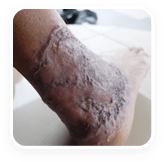
Not every wound needs the care of a specialist, but knowing when yours does can affect your recovery. Whether you’re managing a chronic wound or one that is not healing, an Atlanta mobile wound care provider can deliver a higher level of treatment. However, determining when you or one of your patients needs specialized care is not always easy.
Signs a Wound Needs Treatment From a Wound Care Professional
Wound care specialists are clinicians who treat complex, slow-healing and chronic wounds in the home or in a healthcare facility. Here are some of the important signs you should speak with a wound care provider.
You Have a Wound Type Requiring Specialized Care
Various chronic wounds and ulcers benefit from the use of advanced dressings, debridement and other skilled care. For example, diabetic foot ulcers are often complex wounds to treat, as the ulcers don’t receive the blood flow needed to heal effectively. In severe pressure injuries, the damage can go beyond a superficial wound and reach muscle and bone. Meanwhile, venous and arterial leg ulcers benefit from the assessment of circulatory issues.
Your Wound Is Showing Signs of Infection
Signs that a wound may be infected and need professional wound care include increased redness, warmth and swelling. In some cases, patients will also have chills or a fever. You may also notice a foul odor and pus at the wound site, along with increasing pain. Additionally, important questions to ask a wound care specialist before treatment include those about potential wound complications.
Your Wound Is Not Healing at the Expected Rate
Most wounds will show signs of improvement within 2–4 weeks, with minor wounds often improving in days. If a wound is not getting smaller or the edges are not closing, it may need further treatment from a wound care specialist, as a wound that does not gradually improve may have an underlying issue that needs to be resolved.
Your Medical History Makes the Wound Higher Risk
Existing health conditions can get in the way of a smooth healing process. Wound care specialists will consider these conditions when they are monitoring the wound and developing a treatment plan. For instance, because diabetes affects circulation and nerve function, it can slow a patient’s healing progress. And note that other health conditions can also increase the risk of complications (immune system disorders, for example).
The Wound Involves Deep or Sensitive Tissue
Any wound where bone, tendon or muscle is exposed requires the support of a wound care provider. These deep wounds must be properly cleaned and treated to prevent infections. For patients with deep puncture injuries, large wounds that cannot be easily closed, and wounds with significant tissue loss, a mobile infected wound specialist can deliver treatment where patients are most comfortable.
Speak With Atlanta’s Trusted Wound Care Specialists
Preferred Healthcare provides mobile wound care and ulcer management at homes and healthcare facilities across Atlanta. For expert at-home wound monitoring and treatment, contact our team today. Call (404) 919-5708 or schedule an appointment.